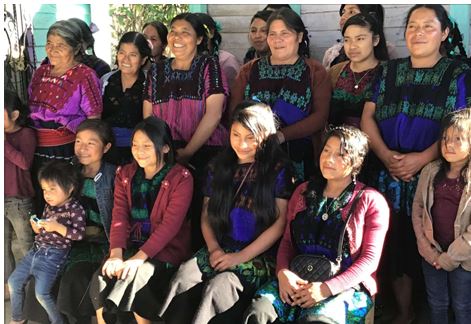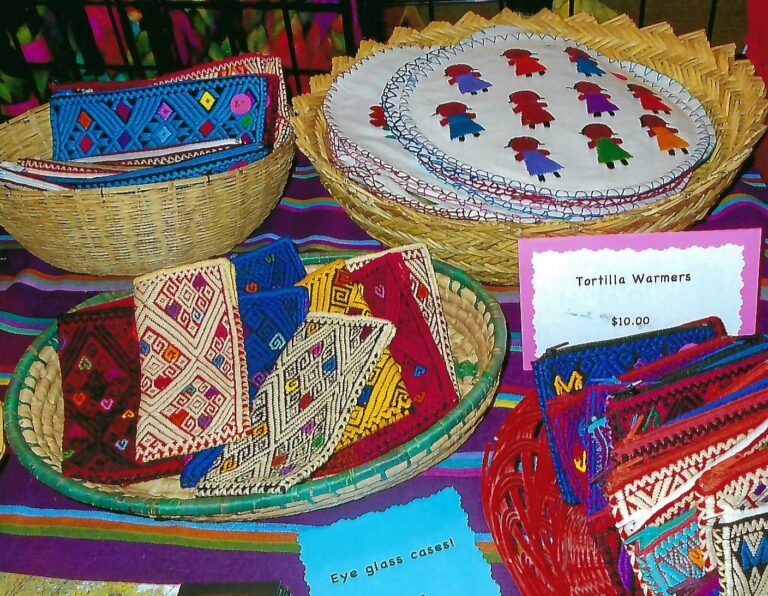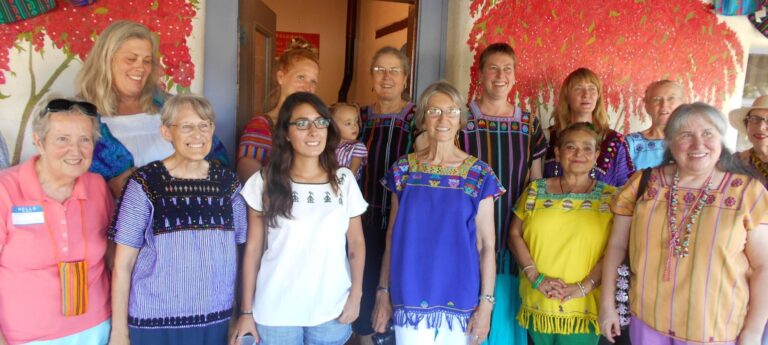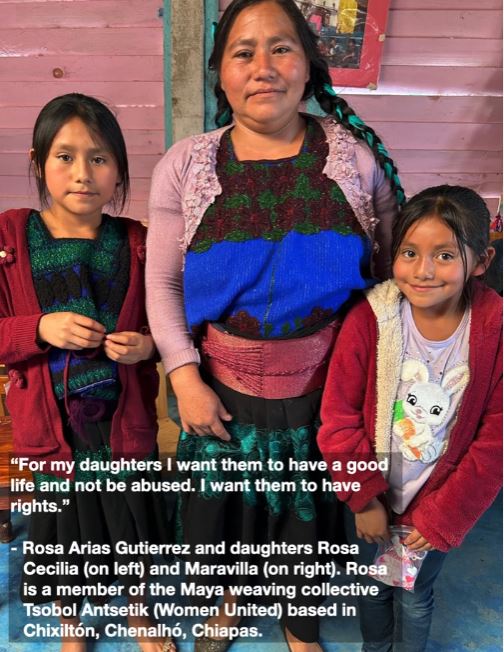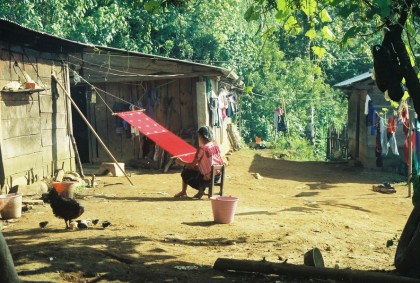
We celebrate several decades of collaboration and friendship with six groups of weavers, totaling about 338 women.
These groups include Mujeres Por La Dignidad (Women for Dignity), a collective of Zapatista women based in the autonomous township of San Andrés Sakam Ch’en de los Pobres; three collectives in different communities in the municipality of San Pedro Chenalho’: Tsobol Antsetik (Women United), Luchom Jolom Antsetik (Women Who Embroider and Weave), and Jolom Luch Maya (Maya Weavers and Embroiderers); a Doll-making group based in the city of San Cristóbal de Las Casas; and Jolom Mayaetik (Maya Women Weavers) a large cooperative of 250 women with its headquarters on the outskirts of San Cristóbal and with members from the municipalities of Chamula, Chenalho’, Oxchuc, Pantelho’, San Andrés Larrainzar, and Tenejapa.
Several of the groups in our partnership are in the resistance, that is they do not participate in state and federal economic development projects that fail to take their needs into account. Instead, they rely on developing local economies of solidarity in collaboration with civil society organizations in Mexico and in the U.S. and other nations, including Weaving for Justice.
Many of the weavers are either Zapatistas or Las Abejas, two organizations dedicated to social and economic justice. On January 1,1994 thousands of armed indigenous men and women took over major population centers and hundreds of large ranches in Chiapas. Calling themselves the Zapatista Army of National Liberation after Emiliano Zapata, the revolutionary leader of Mexico, the Zapatistas rose up against the neoliberal economic policies enshrined in NAFTA, the International Monetary Fund’s structural adjustment programs, and federal policies that undermined the survival of small farmers in Chiapas and throughout Mexico. Civilian support bases for the Zapatistas soon formed in Chenalhó where Las Abejas (The Bees), a Catholic social justice organization, already had a strong presence.
When these groups began to create autonomous economic and political projects, the government responded with force. The Mexican army was sent to Chenalhó to crush the resistance movement, but they could not openly attack the Zapatistas because the Mexican Civil Society and the international community had risen up in support of their goals and demanded a peaceful resolution to the conflict. Therefore, the army trained and armed paramilitaries who began to violently evict Zapatistas and Abejas from their homes and commit other acts of violence against them. The worst example of this occurred in Acteal, a small hamlet in Chenalhó, where members of the Abejas communities had sought refuge from paramilitary aggression. On December 22, 1997, while they were fasting and praying in the chapel, a paramilitary group massacred 45 unarmed Abejas, the majority of them women and children. Tensions continue as the intellectual authors of the massacre enjoy impunity.
For more information about the Zapatistas and Las Abejas visit these websites: www.ezln.org.mx, www.enlacezapatista.ezln.org.mx, and www.acteal.org; for information about the human rights situation in Chiapas visit the website of the Fray Bartolomé de Las Casas Human Rights Center – (https://frayba.org.mx
Weaving for Justice would be happy to put you in touch with representatives from Jolom Mayaetik and the groups in Chenalho’, if you would like to arrange a visit – weavingforjustice@gmail.com.